eyk0p
July 4, 2026

Think back to the last wedding, product launch, or company gala you attended. Chances are, what you remember most vividly isn’t the itinerary or the venue, it’s a handful of moments: a candid laugh, a handshake, the room lit up during a toast. That’s the entire point of event photography. It’s the craft of freezing those fleeting moments so they don’t just live in memory, they live in a photograph you can look back on for years.
If you’re planning an event in Dubai and wondering if you actually need a professional behind the camera, this guide breaks down exactly what event photography involves, how it works from booking to delivery, and why it makes such a difference for weddings, corporate events, and everything in between.
At its core, event photography is the practice of documenting people, moments, and atmosphere as they naturally unfold during a gathering, weddings, conferences, product launches, birthdays, galas, and more. Unlike studio photography, where everything is staged and controlled, event photography happens in real time. The photographer doesn’t get a second take; they have to be ready the instant something worth capturing happens.
The goal isn’t just pretty pictures. It’s storytelling, a full visual record that lets you (or your guests, or your brand) relive the emotion and energy of the day long after it’s over.
Not every event calls for the same style of coverage. Depending on the occasion, an event photographer typically blends a few different approaches:
Candid coverage : natural, unposed moments captured as they happen: a shared laugh, a quiet conversation, a genuine reaction. This is usually the heart of any event gallery.
Stage and keynote shots : for conferences and corporate events, this covers speakers, panels, and presentations from multiple angles, often destined for marketing decks or next year’s promotional material.
Detail shots ; the decor, signage, table settings, and small touches that took real effort to plan and deserve to be documented, not just the people.
Posed group photos ; formal shots of teams, award winners, or families that need a bit of direction and coordination to get everyone looking their best.
Corporate and brand photography ; images specifically shot with a company’s marketing, website, or social media use in mind, capturing the professionalism and energy of the occasion. This often overlaps with 360 product photography when a launch event centers around showcasing something new.
Most events end up needing a mix of all of these, which is exactly why experienced photographers plan their coverage around the specific type of event rather than shooting everything the same way.
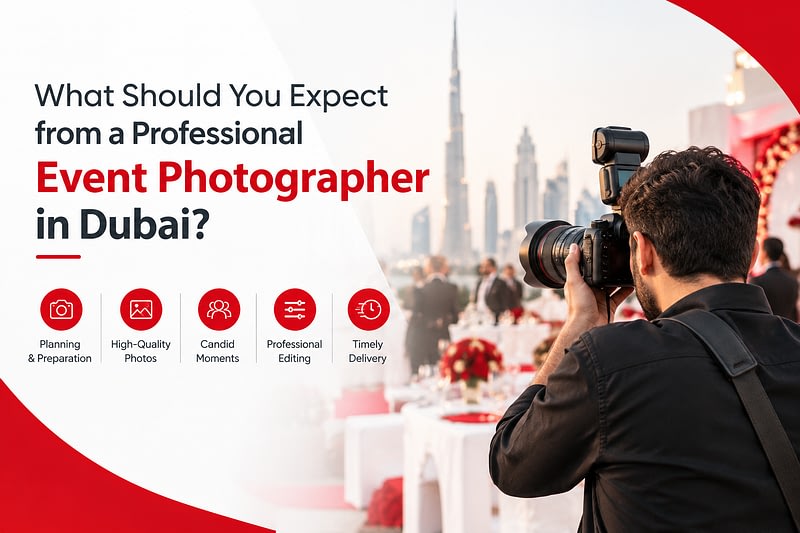
Good event photography starts well before the first photo is taken. A professional photographer will typically discuss the event schedule, key moments, VIPs, and any must-have shots with the organizer in advance. This preparation, sometimes called a shot list, helps make sure nothing important slips through unnoticed once the event is in full swing.
Arriving early to walk the venue makes a real difference. It gives the photographer a chance to check lighting conditions, find the best angles, and figure out where key moments (like a stage, entrance, or head table) will happen, so there’s no scrambling once guests start arriving.
This is where the skill really shows. A photographer needs to move through the space without disrupting the flow of the event, anticipate moments before they happen, and adapt quickly to changing light that’s harsh daylight outdoors or dim, moody lighting inside a ballroom. Multiple camera bodies, fast lenses, and a reliable flash setup are standard gear for handling whatever the event throws at them.
Once the event wraps, the real work is only half done. A single event can produce thousands of images, and a professional photographer will carefully sort through them, selecting the strongest shots and discarding duplicates or unusable frames. The chosen images then go through editing adjusting exposure, color balance, and sharpness so skin tones look natural and colors stay true to the event’s actual atmosphere.
The final step is handing over a curated, polished gallery, usually through a secure online link where clients can view, download, and share their photos. Turnaround times vary, but a professional will always communicate a clear timeline upfront so there’s no guessing about when the photos will land.
It’s tempting to think a smartphone camera and a few willing guests can cover an event just fine. In reality, professional event photography brings a few things a phone simply can’t:
For businesses especially, professional event photos become long-term assets used in marketing materials, social media, press coverage, and internal communications well after the event itself is over. For hospitality brands, pairing event coverage with 360° virtual tours of the venue can extend that value even further, giving future guests an immersive preview of the space itself.
If you’re booking an event photographer, a little preparation goes a long way. Share your event schedule and any must-capture moments ahead of time, point out key people the photographer should know (VIPs, speakers, the couple, the founders), and be clear about how you plan to use the final images that’s a private gallery, a company website, or a social media campaign. The more context your photographer has going in, the more tailored and useful your final gallery will be.
Event photography is far more than someone walking around with a camera. It’s a blend of preparation, technical skill, quick instincts, and a genuine eye for storytelling turning a few fast-moving hours into a gallery you’ll actually want to look back on. Whether you’re planning a wedding, a corporate conference, or a brand activation, the right photographer doesn’t just document your event, they capture why it mattered.
Looking for a brilliant photographer to capture your space?
Get in touch with us today for a free quote — let’s bring your vision to life!
Shahid Adam is photography and videography studio in Dubai. Photographer in Dubai makes amazing photos and videos for all your needs with creative skills & modern tools.